
As a well-wisher of the Indian Statistical System and part of the system for more than 37 years, Sunil K Sinha, former DG and CEO of NSSO, offers suggestions to improve data quality.

Labour markets showed positive momentum in August as the unemployment rate fell for the second consecutive month to a four-month low of 5.1 per cent from 5.2 per cent in July. It was on account of the start of the sowing season.
A government panel examined the records of employees surveyed by Labour Bureau's quarterly enterprises surveys and mapped it with the EPFO's subscribers and found "unexplained variations" between the two.

There is good news for activists fighting to save the dwindling population of tigers in India. A sample survey in Kaziranga National Park in Assam, which is being carried out by the conservation group Aaranyak under the aegis of the Assam Forest and Wildlife Department, has indicated that a sizeable tiger population has survived in the sprawling wildlife sanctuary.The recent deaths of ten tigers in Kaziranga had alarmed the authorities.
The ICC said a sample survey cannot provide a real picture.

India's unemployed, the report said, were mostly those with higher education degrees and the young.

After adding 11.7 million workers in the October 2022-September 2023 period from the pandemic lows in April 2021-March 2022, total workers employed in the vast informal sector in India - at 109.6 million - still remains below the pre-pandemic period.
The unemployment rate for people aged 15 years and above in urban areas declined to 6.7 per cent in the January-March period from 6.8 per cent a year ago, according to the National Sample Survey Survey (NSSO). Joblessness, or unemployment rate, is defined as the percentage of unemployed people in the labour force. The unemployment rate in the March quarter of FY23 was 6.8 per cent, while it was 6.6 per cent in April-June as well as in the third quarter (July-September 2023) of the previous fiscal.
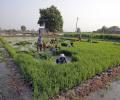
'They are totally disconnected with farm activities which their families have been involved in for years.'

The Survey says that present skilled workforce in India is only 2%.
The drought of appropriate employment opportunities and rising incidences of unemployed educated graduates fail to inspire confidence about the future, says Kunal Kumar Kundu
Real estate buying dropped between 2004 and 2012.

Unemployment rate for persons aged 15 years or above declined to 3.1 per cent in 2023, the lowest in the last three years, as per a report of National Sample Survey Organisation under the statistics ministry. According to Periodic Labour Force Survey (PLFS) for calender year 2023, the unemployment rate came down to 3.1 per cent in 2023 from 3.6 per cent in 2022 and 4.2 per cent in 2021. Joblessness, or unemployment rate, is defined as the percentage of unemployed people in the labour force.
In the rural areas, 35.3 per cent of the workers are employed as casual labourers while the figure is 14.6 per cent in the urban areas.
Economic growth not only changed the food consumption pattern in rural households but has also encouraged rural India to go for more efficient energy sources like liquefied petroleum gas.
Rediff.com's data journalists have broken down the National Sample Survey Office 68 round (July 2011- June 2012) report data into a state-wise listing.

Unemployment rate for men is the highest in Lucknow among major cities.

While data can empower communities, it reinforces identities, making local politics more caste-centric, with decisions increasingly contested on the grounds of representation.
Such dynamics could lead to shifting alliances and, in the worst case, local governance getting paralysed as each group demands proportional power-sharing, explain Amitabh Kundu and Mehebub Rahaman.
According to principal advisor with the Planning Commission and former chief statistician, Pronob Sen, there were 40-45 million more people in the age group of 15-59 between 2004-05 and 2009-10. The unemployment rate has correspondingly fallen from 2.3 per cent to 2 per cent of the labour force.

Even by conservative assumptions that 5 to 10 per cent of infected individuals develop long Covid, India today may be home to 50 to 100 million infected individuals -- many silently coping with breathlessness, fatigue, palpitations, brain fog, or unexplained clotting tendencies.

About 7 crore (70 million) people in the country are either unemployed or under-employed, the National Sample Survey Office has said in its latest report.

The map above visualises the percentage of households that have access to drinking water within the premises as found in the National Sample Survey's 69th round (2012).
The survey carried out by Max New York Life and the NCAER based on income data has found that India has less poverty than estimated by the government's National Sample Survey.
Jaitley said the Budget proposals would boost the realty sector, which would help meet the housing needs of a vast section of the population.

Women are increasingly using gig work as a pathway to economic independence which has no entry barrier, especially as an alternative to traditional jobs.
According to the 66th round of National Sample Survey carried out between July 2009 and June 2010, all India average monthly per capita consumer expenditure in rural areas was Rs 1,054 and urban areas Rs 1,984.
The Ministry of Statistics and Programme Implementation (MOSPI) is in talks with the Department of Posts to take the help of its staff in collecting sample data for the proposed Consumer Price Index for Rural India (CPI-R). The data for the index would be collected from 1,000 villages, Chief Statistician of India Pronab Sen said on the sidelines of a national seminar on the results of the 61st round of the National Sample Survey.
Food insecurity and hunger are rooted in bad policies, faulty design, poor governance and a lack of political will.

Rediff's data journalists bring you data about toilet/bathroom and sanitation facilities across India from the 69th round (2012) of National Sample Survey.

This map shows the districts of India with their encroachment levels.

While the dire image of Indians having to travel long distances for water and other basic needs is stuck in most of our heads, the official statics published in the 69th round of the National Sample Survey (2012) actually present quite a heartening picture.

The rise was more pronounced in urban areas than in the rural areas.

A recent World Bank report placing India among the most equal countries globally may present a limited view of inequality, with economists suggesting that broader data sets could tell a different story. According to the report, India's Gini index (or coefficient/ratio), a key measure of inequality, stood at 25.5 in 2022-23, placing the country fourth globally in terms of equality, behind only the Slovak Republic, Slovenia, and Belarus.
Job opportunities across the country grew at an estimated rate of 2.62 per cent every year, the latest quinquennial (once every five years) analysis by the National Sample Survey Organisation (NSSO) showed. The growth of unemployed, at 5.42 per cent per annum, outnumbered the rate of job creation during the survey period between 1999-2000 and 2004-05. Unemployment rate was found to be maximum in qualified graduates in rural and urban parts of the country.
Prime Minister Manmohan Singh has directed the ministries and government departments not to duplicate official estimates and sought strict compliance to ensure that data and statistics collected are consistent.

The employment rate in the country declined marginally from 39.2 per cent to 38.6 per cent between 2009-10 and 2011-12, the Rajya Sabha was informed on Wednesday.
